Borrow area dredging
Sand is drawn from a subsea borrow area with the submersible dredge pump, at the extraction point defined by the project.

Restoration of eroded beaches by sand placement: we dredge sand from a borrow area and place it on the beach to recover its width and profile, using our own dredge pump and self-elevating platform.
COCOA’s beach nourishment process, from the offshore sand bank to the shoreline.
At Corporativo Costa Afuera (COCOA) we apply our dredging equipment to beach nourishment: a self-elevating platform provides a stable base, the submersible pump draws sand from the seabed and a discharge line carries it to the beach.
There the sand is placed and shaped to restore the width and profile of the eroded stretch. Operating our own equipment lets us control mobilisation time, schedule and cost.
From the sand bank offshore to the beach, in five steps.
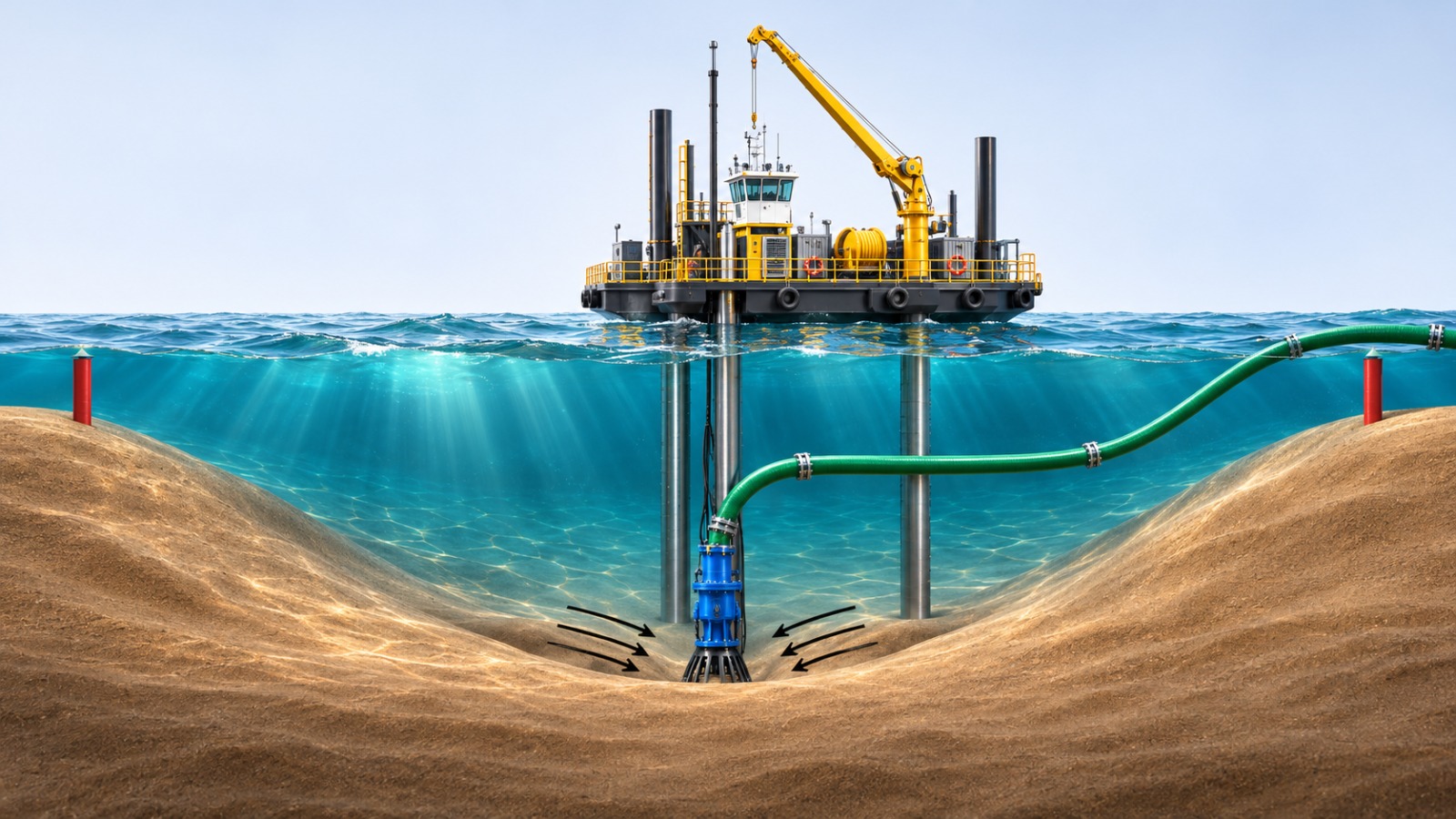
The self-elevating platform lowers its legs to the seabed and becomes a stable base on the water. Its crane lowers the submersible pump onto the sand bank.
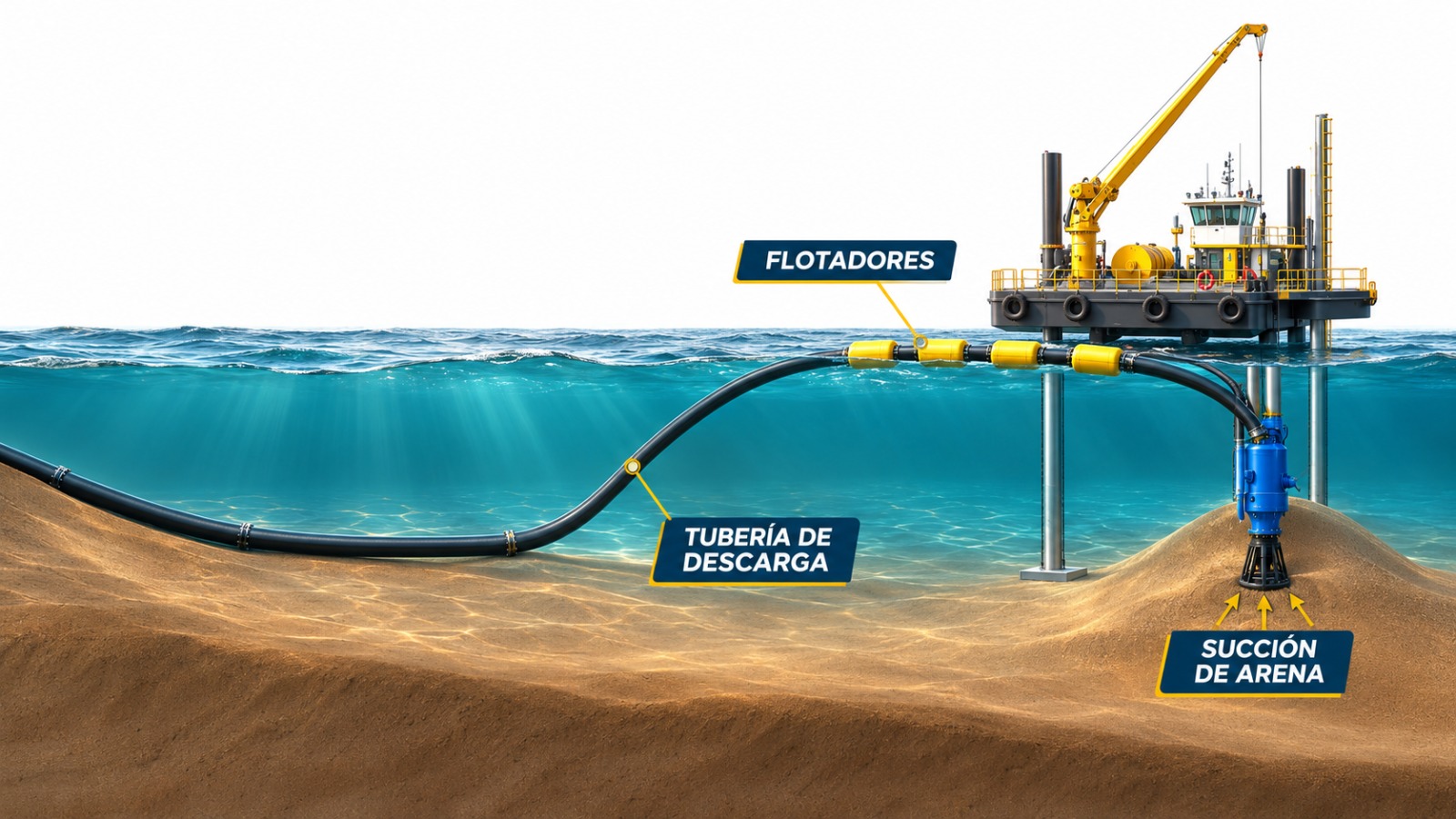
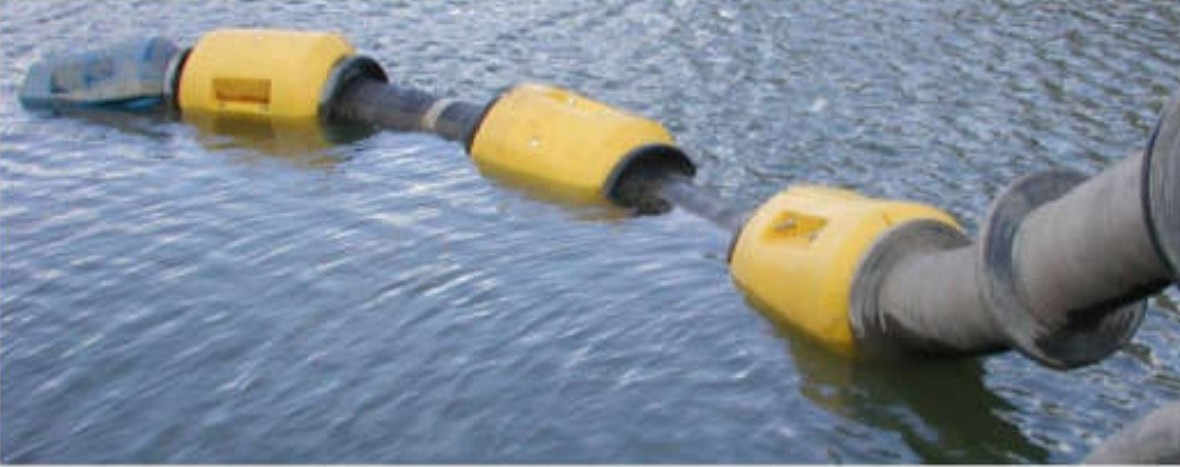
The DAMEN DOP200 pump draws sand from the bank with the help of its water jet. The sand-water mixture leaves through the discharge pipeline, kept afloat by floats.
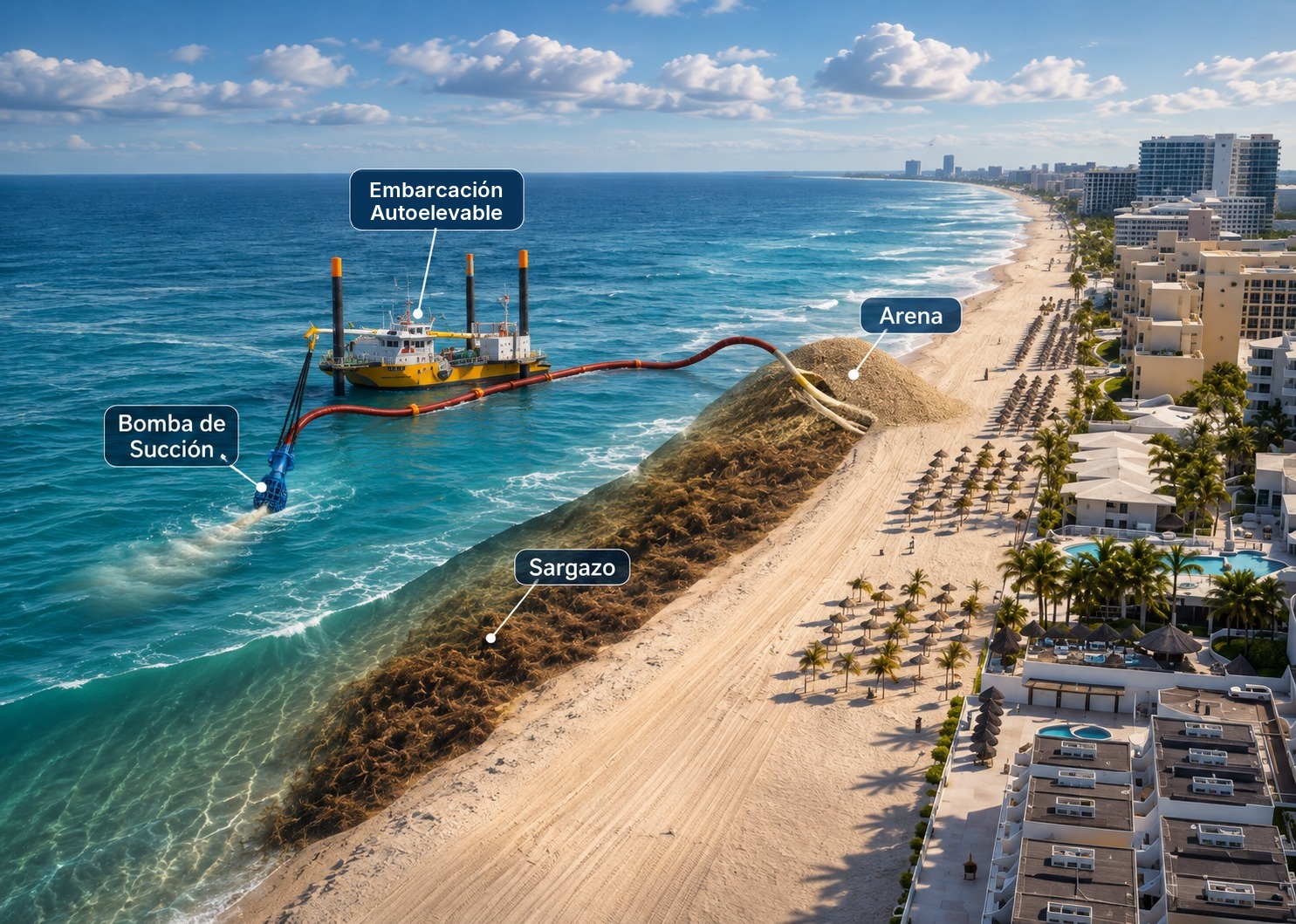
The discharge pipeline carries the sand from the platform to the stretch of beach being restored, with no trucks or earthmoving on land.
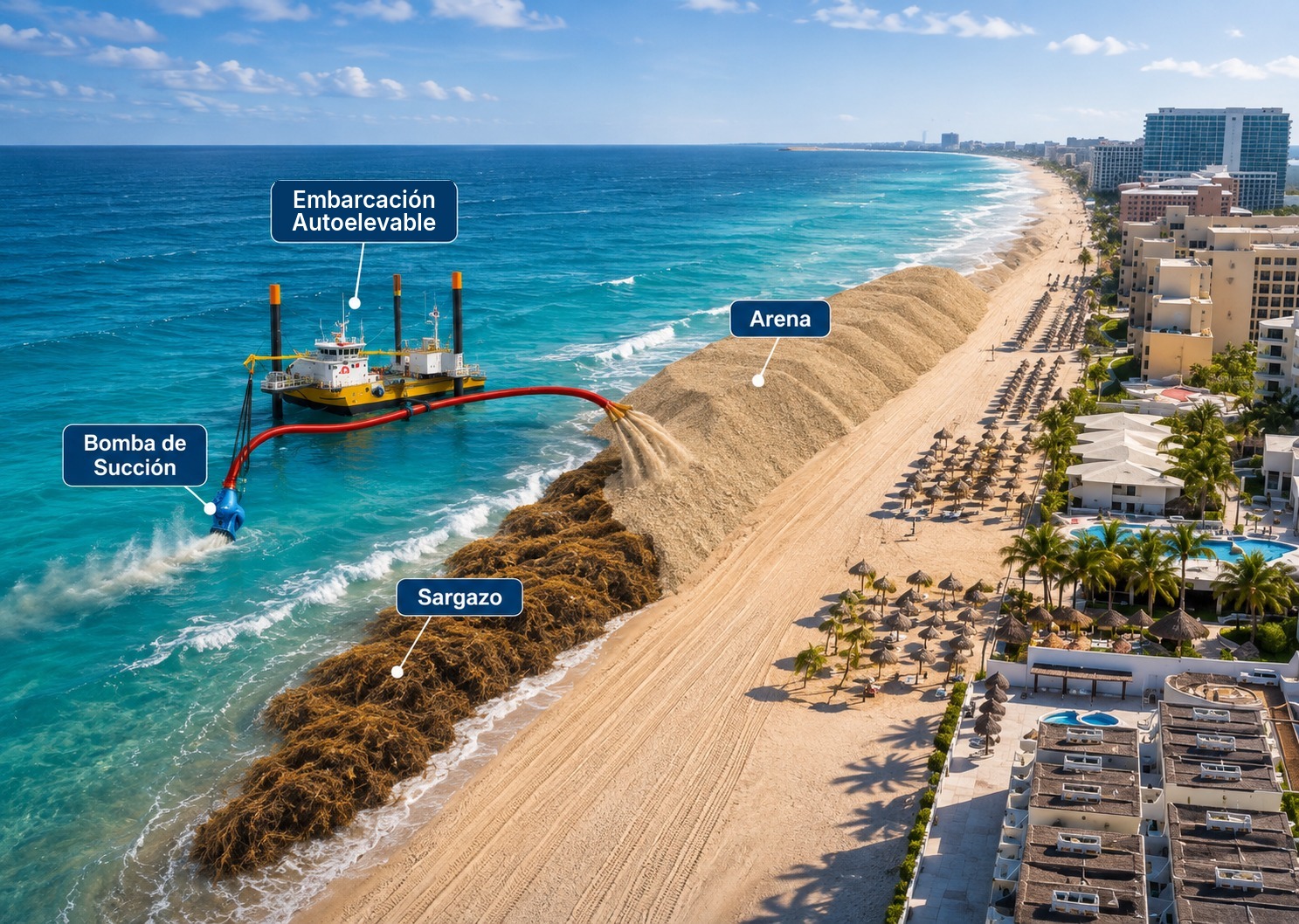
Sand is placed along the shoreline, including the strip where sargassum accumulates, in line with the project environmental permit.
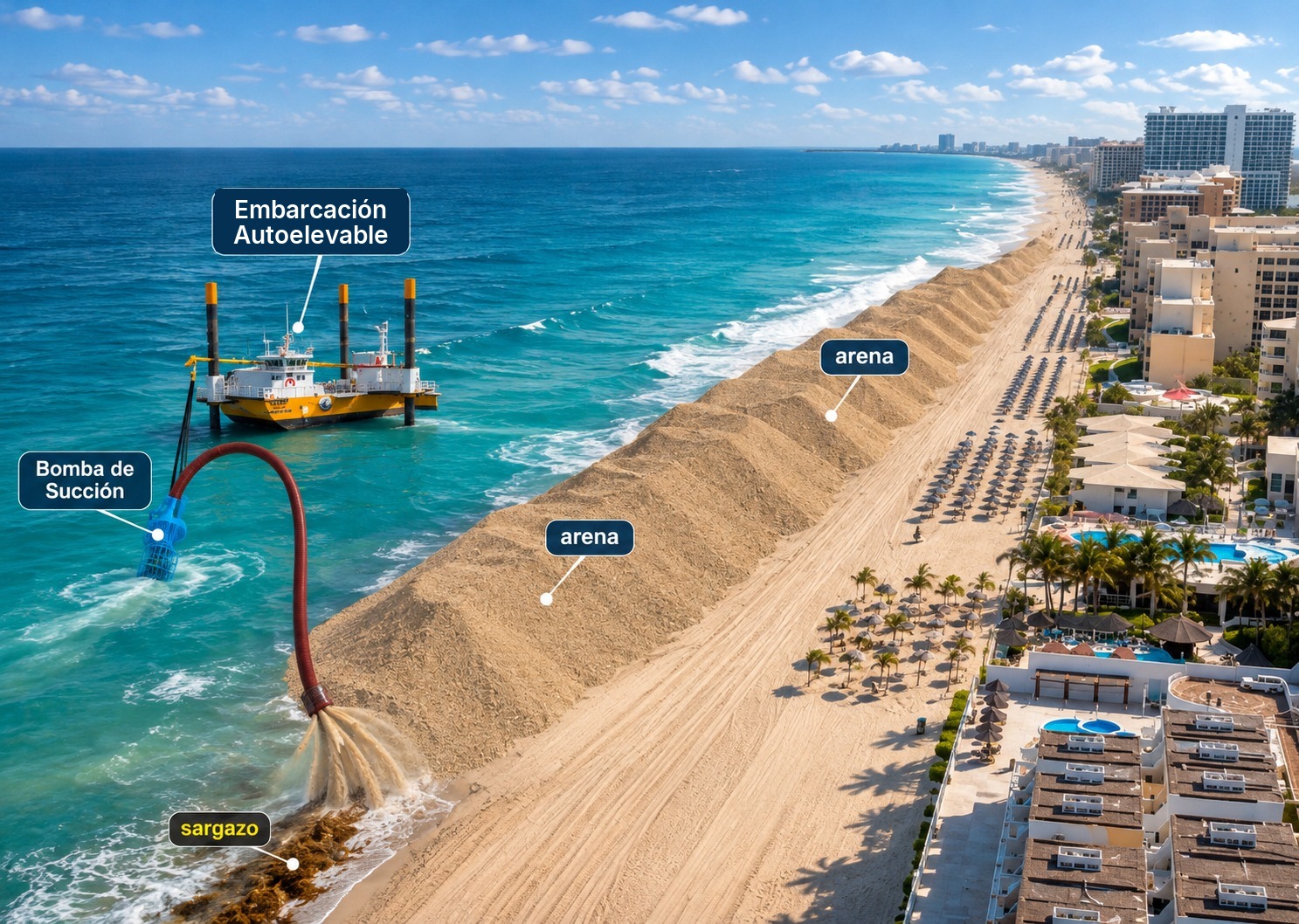
The sand forms a continuous berm along the beach, which is then shaped to restore the width and profile of the eroded stretch.
Self-elevating platform, dredge pump, floating pipeline and hydraulic power unit.
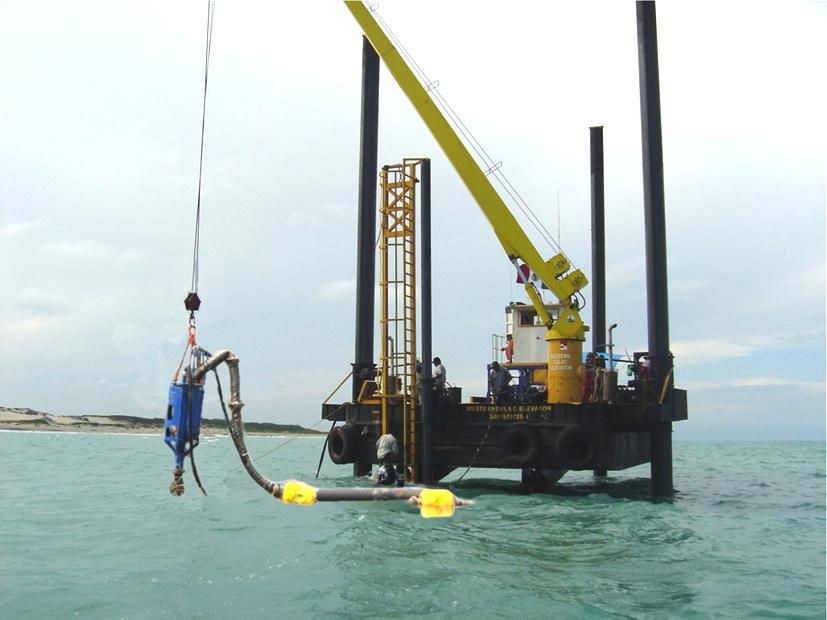
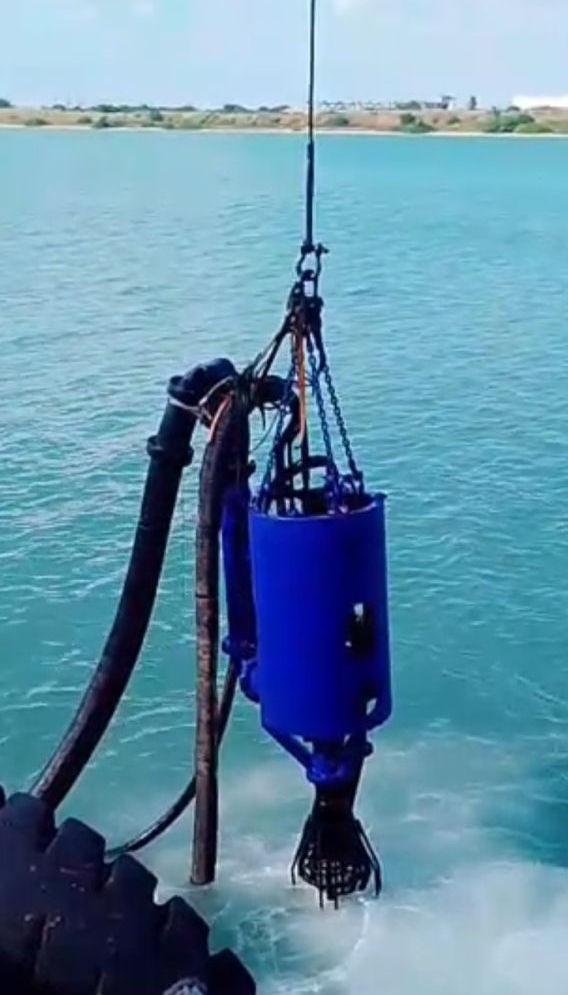
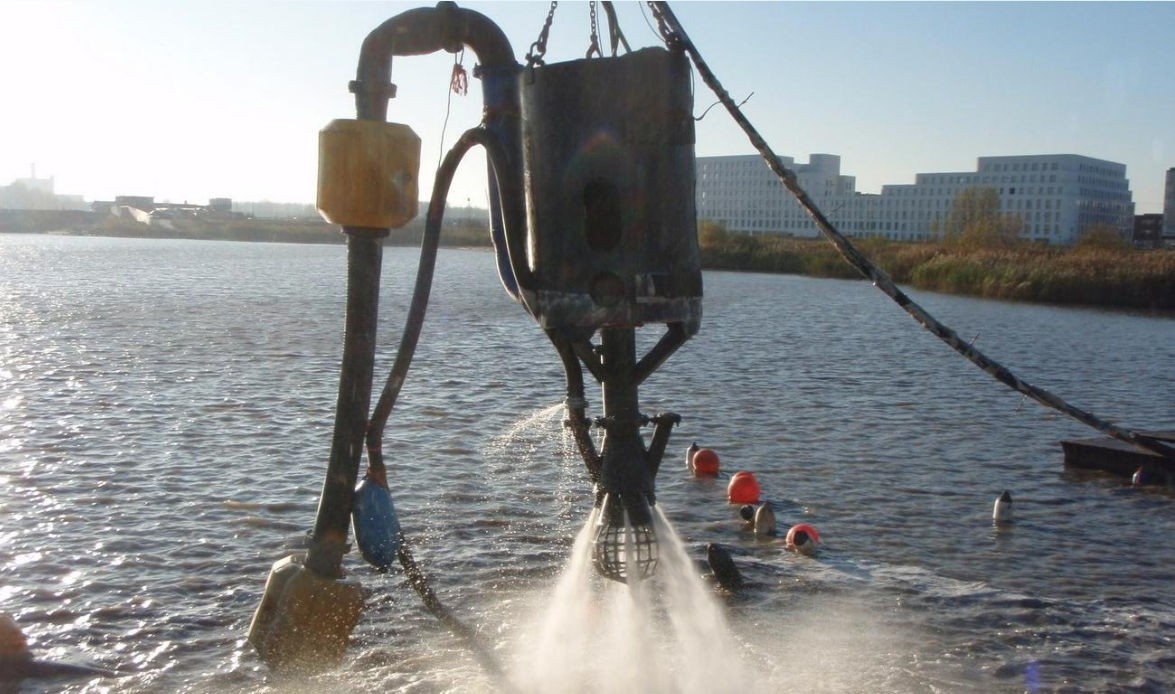
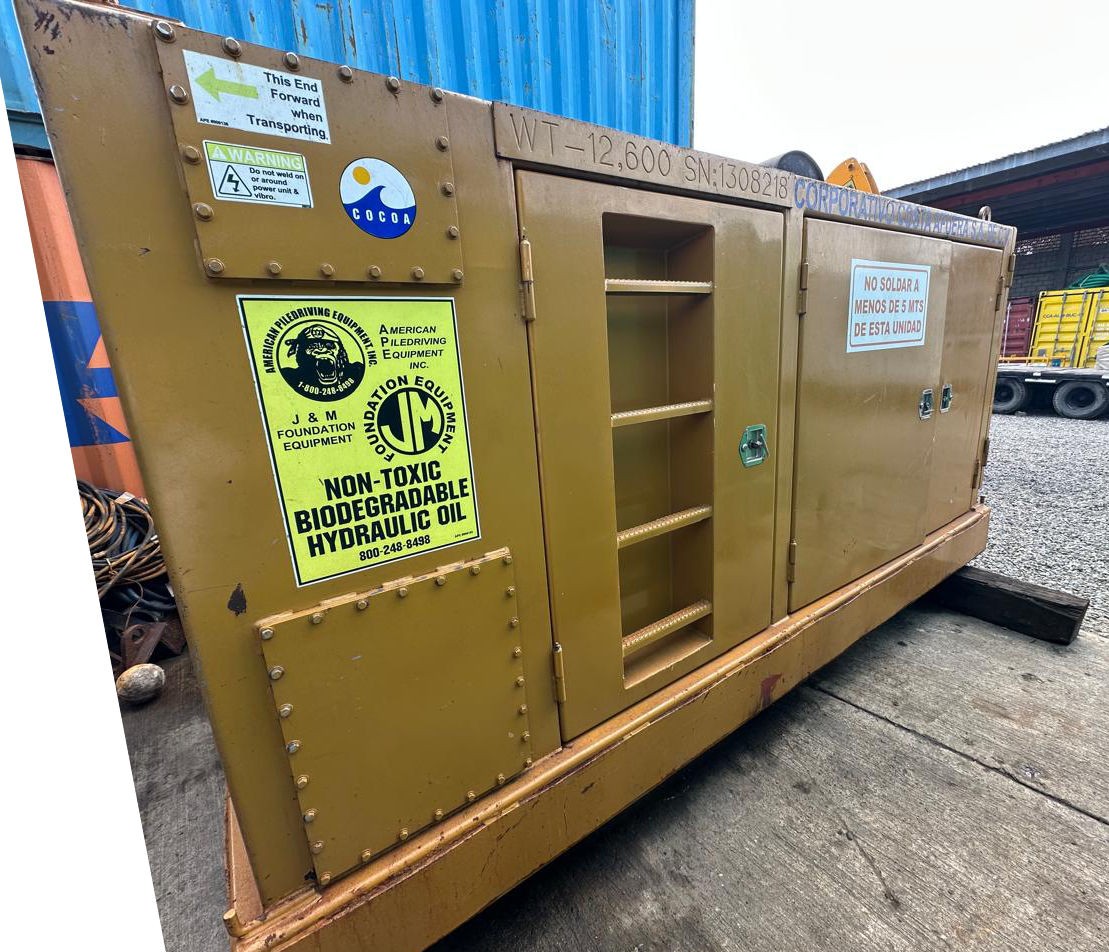
The dredge pump we use for beach nourishment.
| Pump capacity | Approx. 900 m³/h |
|---|---|
| Suction diameter | 200 mm |
| Discharge diameter | 200 mm |
| Discharge connection | 80 mm |
| Impeller diameter | 470 mm |
| Impeller width | 125 mm |
| Spherical passage | 125 mm |
| Impeller | Closed, 3 vanes |
| Casing | Ni-hard 4 |
| Water jet | 250 m³/h at 8–10 bar |
| Maximum speed | Approx. 1,200 rpm |
Rehabilitation of the well platform, embankment and navigation channel in the Cerro Azul–Naranjos operational sector.
View detailsDredging works in the Tamiahua Lagoon, executed by COCOA.
View detailsMaterial extraction and obstacle removal in the access navigation channel.
View detailsEach project is quoted on the length of beach, sand volume and sea access.
We mobilise equipment from Tuxpan along the whole Gulf of Mexico coast and the Yucatán Peninsula.

Founded by Ing. Ricardo Vázquez Adame, a pioneer of Mexican underwater engineering. In 1979 he led the operations that trained the first 15 professional divers in the country. That technical background supports every project COCOA delivers today.
Founder: Ing. Ricardo Lorenzo Vázquez Adame, a pioneer of the Mexican underwater industry, with a documented track record since 1979.
It is the placement of sand taken from a borrow area on an eroded beach. The sand is dredged by pump, carried through a pipeline and placed and shaped on the beach to restore its width.
The DAMEN DOP200 submersible dredge pump, around 900 m³/h, mounted on one of our self-elevating platforms, Clon or Dulac, with a discharge line to the beach.
The beach location, the length of the stretch, the estimated sand volume, the borrow area if already defined, and the project dates.
Across the Gulf of Mexico and the Mexican Caribbean. We mobilise our equipment from our base in Tuxpan, Veracruz.
We work under the project environmental permit: the extraction point, volumes and material handling follow what that permit sets out.
Let us know the location, length of beach, estimated sand volume and dates. We quote with our own equipment.

